
Everyone seems to have a hot take on the output of AI, as if it’s just one thing.
People have opinions about AI video, images, text, music, and software. They have feelings about whether they like any of it at all, and then they make judgments about whether what it generates is any good. Often, they’ll point to examples of what they consider crap or embarrassingly sloppy.
And no doubt, there is plenty of that out there.
If you’re a world-class music producer, you probably disdain everything coming out of Suno. Frankly, I have to confess that I’m not a big fan of AI-generated music myself. I don’t doubt that it can produce good music, or that it will get better. I just don’t have much interest in it.
If you’re a photographer, you might scoff at the latest AI image generator. If you’re an award-winning copywriter, the AI slop that’s everywhere may vex your soul. And if you’re a software engineer looking at AI-generated code, it can be easy to point out how ridiculous some of it is.
That said, even people who have been most opposed to AI often start to admit, when they give the latest models an honest look, that it’s getting very good. And if you know how to work with these tools—how to give them context, teach them what you’re trying to do, evaluate the results, and dial them in—they can produce exceptional work.
So when we judge the quality of something made with AI, whether it’s code, images, text, video, or anything else, I think we need to keep three things in mind.
First, what is the tool capable of?
Which model are we talking about? Are we looking at a free version or one of the most capable frontier models? What happens when you really kick the tires, test its limits, and find the work it does best? There’s a huge range in the capabilities of the tools themselves.
Second, how carefully is it being used?
Even with the best models, the first pass usually isn’t as good as the work can be. How thoughtful is the person using it? Are they evaluating the output, steering it, addressing what’s wrong, and trying again until it hits the mark? Every model has its strengths, weaknesses, techniques, and settings. There’s a difference between using a tool and learning how to use it well.
Third, who is doing the work?
How much does that person know about their field? How good is their judgment? How much taste, experience, imagination, or talent do they bring to the process?
Consider the weakest tools, used carelessly by someone without much expertise. We see a lot of that, don’t we? But it’s hardly a fair measure of what AI can do. Finding an obvious AI gaffe may make a threatened professional feel a little better, but it’s an easy target.
Then there are the very capable models used carelessly by people who aren’t at the top of their field. The output might be okay. It might even be useful. But it’s often pretty obvious, and we’re seeing plenty of that, too.
Something more encouraging happens when a person who isn’t the world’s most talented creator uses a capable model thoughtfully. Maybe they have an idea for something they need, something they want to make, or something that would help other people. They might lack the skills to bring it into the world on their own. But if they’re careful, persistent, and willing to learn the tools, they can make something genuinely good. That’s a huge benefit.
But there’s one combination I find even more exciting.
What happens when someone who is exceptionally talented, profoundly imaginative, or deeply experienced gets access to the best tools and learns to use them thoughtfully?
Unfortunately, some of the people best equipped to do that may also be the most hesitant to try. They’ve spent years developing their craft. They’re understandably protective of it and don’t want to see it watered down, disrespected, or made obsolete. They may also be worried about losing work to people who can now produce a passable imitation of what they do. Those concerns are real.
So it may be that some of the best and brightest people haven’t even dipped their toes in the water yet. If that’s true, it would be a shame—not only for them, but for the rest of us who haven’t had a chance to see what they might make.
That person might start out skeptical. Maybe all they’ve tried is a free chatbot, and the results have reinforced their doubts. But I’ve seen what happens when talented professionals finally give a more capable model a serious try: they’re stunned. And if they keep going—learning the differences between platforms, understanding the options, and developing a feel for how to guide the work—the possibilities become hard to imagine.
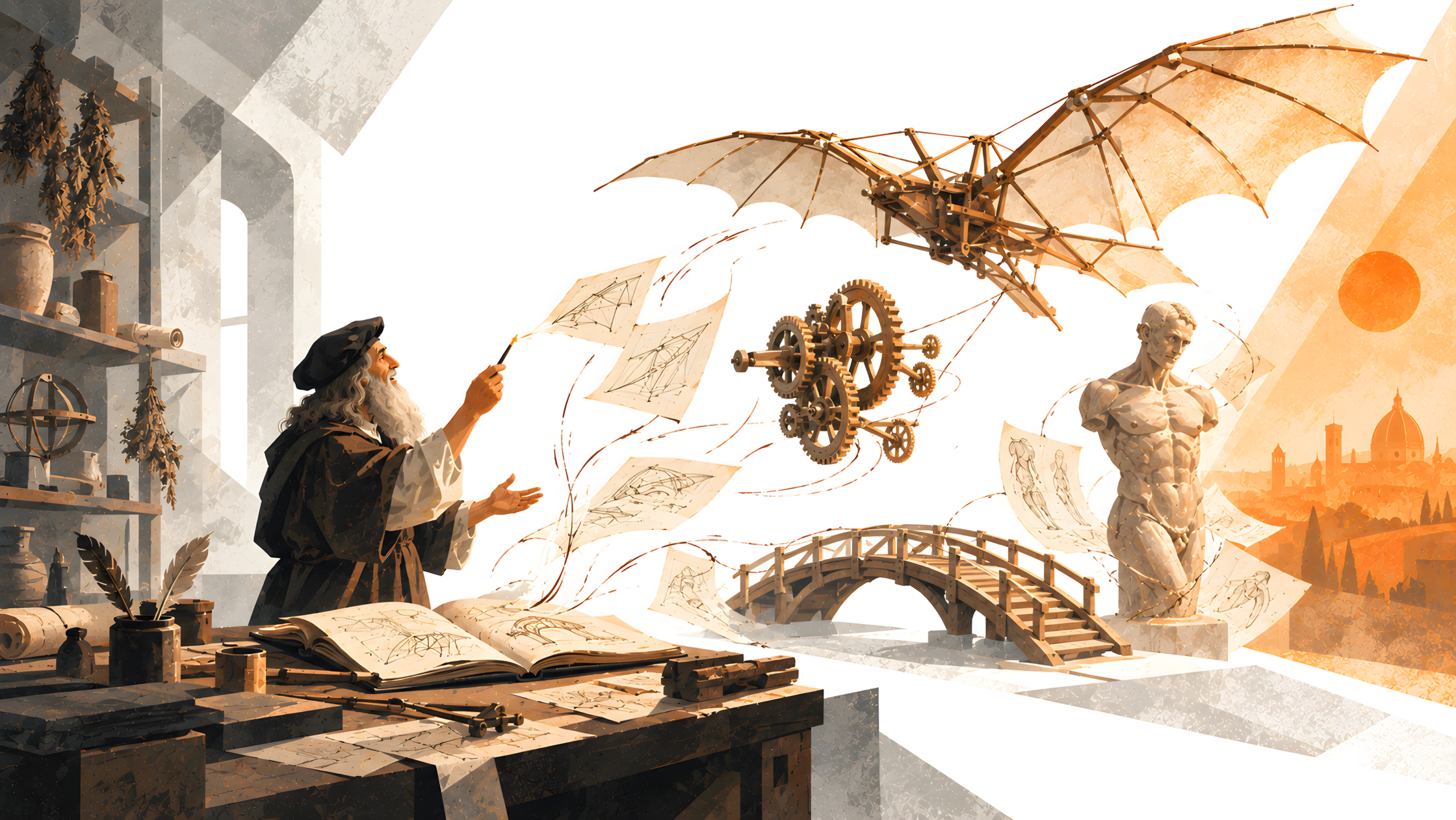
What might Leonardo da Vinci have done with tools that let him explore and test more of the ideas in his notebooks? What could a brilliant chemist or medical researcher do if they could investigate more promising directions before choosing which ones to pursue in the lab? What could an inventor build if the processes that once slowed them down became easier to work through?
These are people who could already do astounding things. They’ve always been constrained by time, resources, and the number of directions one person or team can explore. I’m curious what they’ll bring into the world as some of those constraints begin to loosen—whether that means new ways to address disease, solutions to stubborn problems, or physical things that become easier to design and produce.
There’s plenty of AI slop. There are plenty of examples of these tools being used carelessly or ineffectively. Those examples tend to get the spotlight, in part because so many people have understandable concerns about where this technology is taking us.
But the sloppy work isn’t the whole story. I’m thinking about the best and brightest people, including those who have good reasons to be skeptical but haven’t yet given these tools a serious try. What happens if they do? What will they make when they bring their talent and judgment to the most capable tools and use them with care?
That’s the work I’m most eager to see.