
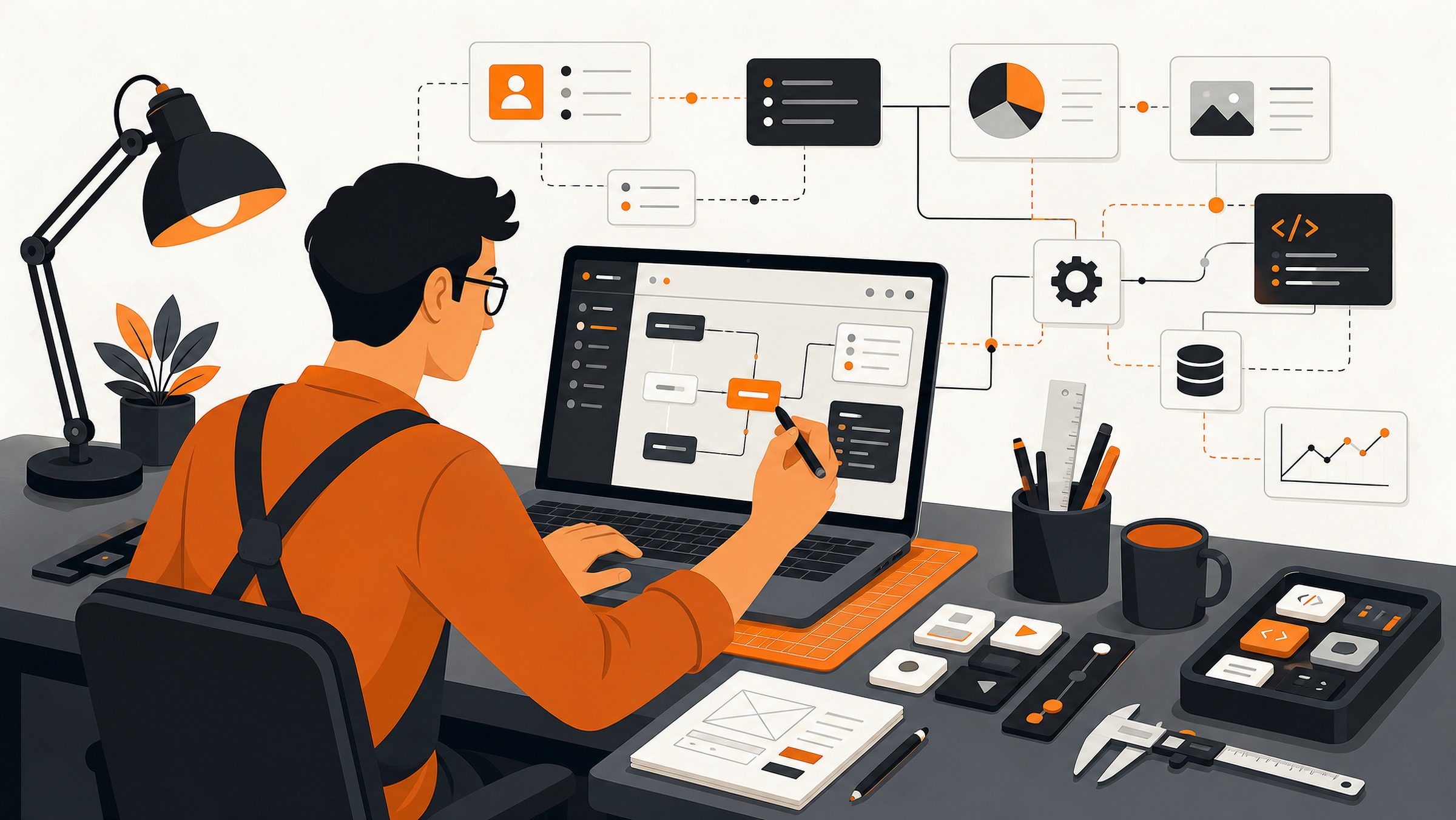
Not long ago, building software meant starting a company. Or at the very least, assembling a team, raising capital, and planning for users at scale. You built products for markets, plural.
But something has changed.
The rise of AI-powered code generation has quietly ushered in a new category of software: tools built for a market of one.
I mean that literally. One person. One user. One specific need. Or in the case of your agency: one team, one workflow, one nagging operational gap no SaaS tool quite solves.
Calendly Is Fine, But It’s Not Me
Take scheduling tools, for instance. Calendly works well for many people. But I’ve never liked how impersonal it feels. It gives someone an open window into my availability, but that openness is misleading. Just because I could take a meeting doesn’t mean I should. Like many agency leaders, I want more control, not just over when I meet, but why.
So I still book meetings the old-fashioned way: by suggesting a few times over email. The problem? That takes time. Checking my calendar, weighing priorities, formatting a reply. Too much friction.
So I built a solution.
With the help of Claude, I created a Google Apps Script that checks my Google Calendar for open slots. It reads a few fields from a Google Sheet, how many slots I want to offer, over what span of time, and then generates a clean list of options I can copy-paste into an email. Fast, flexible, and 100% mine.
Guitar Practice, But Smarter
Another example: I play guitar and like practicing chord transitions using the Nashville number system. So I asked ChatGPT to whip up a tiny HTML + JavaScript page that randomly flashes numbers between 1 and 7 at a set tempo, with pause and play controls.
Nothing fancy. Just exactly what I needed.
A tool for one user. Me.
The Rise of Agency-Specific Software
What these examples illustrate isn’t just clever use of AI. It’s the emergence of a new mindset for agency operators:
You don’t need to wait for a SaaS company to productize your workflow.
You don’t even need to learn to code.
With tools like ChatGPT and Claude, the friction between idea and implementation has dropped to near zero. You describe a problem. They generate a solution. You tweak it, try it, and own it.
This isn’t enterprise software. It’s not even small business software. It’s personal software, or in your case, agency-internal software. Lightweight, single-purpose, zero-friction tools that solve annoyances and accelerate routines.
Think: brief generators. Client intake forms with smart routing. QA checklists that flag missing assets. Campaign budget calculators tailored to your pricing model. Content repurposing helpers that transform case studies into social snippets.
And here’s the kicker: The ROI on these micro-tools is often enormous. Not in dollars, but in time, energy, and momentum.
A New Creative Class
We’re entering an era where agency strategists, account managers, and creatives can create bespoke workflows with the help of AI copilots.
That means:
- Account directors who can build custom client intake checklists.
- Designers who can automate their asset handoff workflows.
- Project managers who can generate QA tools tuned to their process.
- Strategists who can build campaign calculators and brief templates.
In short, anyone on your team with a workflow friction point can now have a developer on call.
And they can build software for a market of one, or one agency.
This is exactly the kind of capability we help agencies develop in our Team Toolbuilding Lab: hands-on coaching to turn workflow annoyances into lightweight, agency-owned utilities. No engineering degree required.