
Read, Don’t Write: How AI Is Rewiring the Core Skills of Knowledge Work
A strange thing happened the other day. I asked ChatGPT Deep Research to generate a white paper, a complex one, with footnotes, citations, and a carefully reasoned argument.
Six minutes later, it was done.
Twenty-four pages of seemingly thoughtful, well-researched content. The kind of work that used to take a week. Maybe two. And yet, when I opened the file, I didn’t feel finished. I felt assigned. Because while AI can generate content faster than you can blink, it still can’t read it for you.
And that’s the pivot we need to talk about.
The Content Flood Has Arrived
We’ve spent decades refining our ability to produce content: write better copy, structure better arguments, draft tighter briefs. In a pre-AI world, output was limited by human speed. Creation was the bottleneck.
Not anymore.
AI has flipped the balance. Whether it’s campaign concepts, client reports, creative briefs, research summaries, or strategic decks, high-quality first drafts can now be generated in minutes. In fact, they can be generated faster than they can be read.
Think about that. Not written, read.
This isn’t just a productivity gain. It’s a paradigm shift. The value of agency work is tilting away from the act of creating content and toward the ability to evaluate, refine, and make meaning from it.
Writing Is Optional. Reading Is Not.
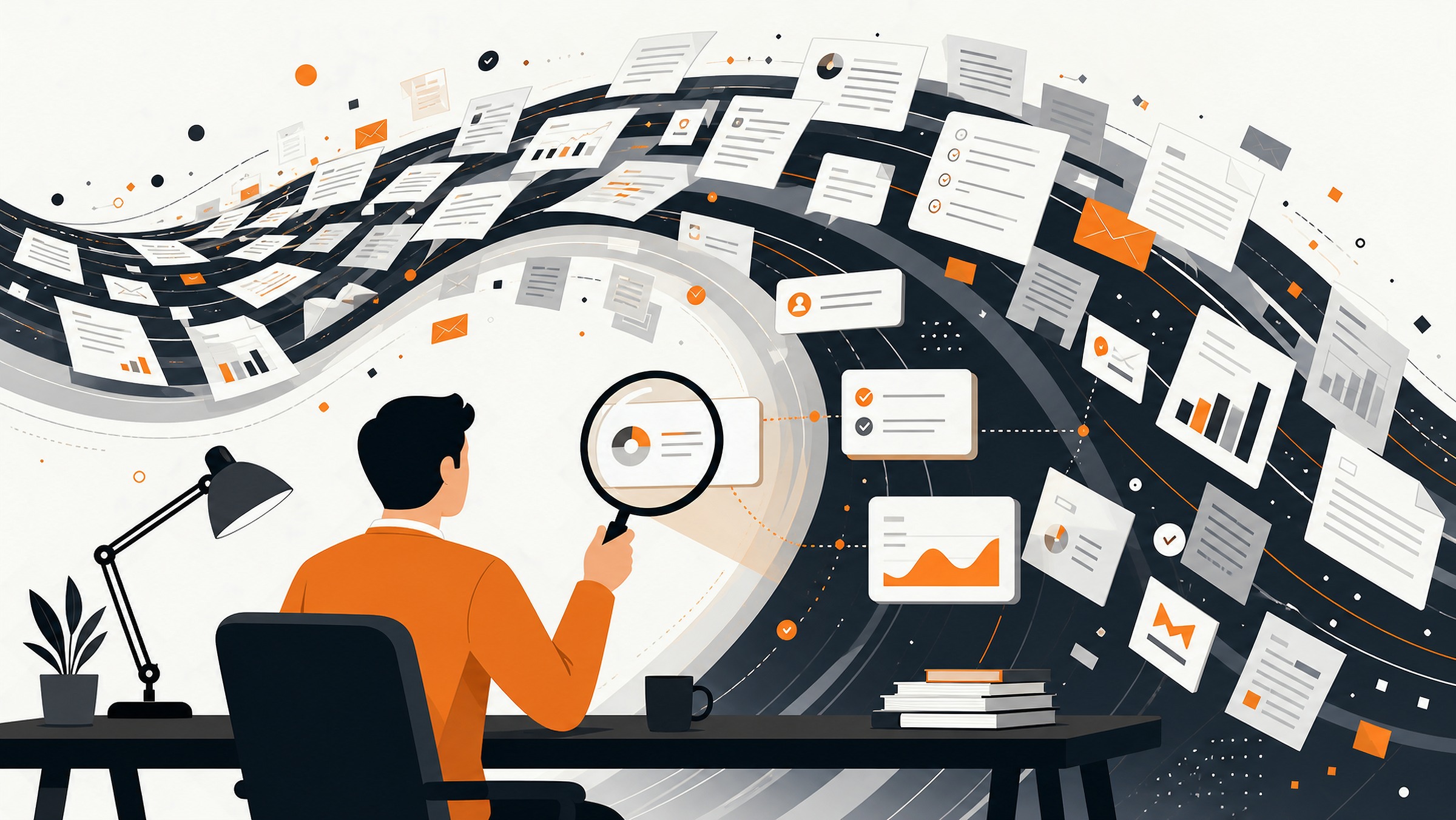
Here’s the hidden tension: An AI can generate a tsunami of content. But it still requires a human to process it.
Someone still needs to read the draft.
- Catch the inconsistencies.
- Spot the logical gaps.
- Sense when the tone is off.
- Decide what’s worth keeping, reshaping, or deleting altogether.
This is editorial work, not in the narrow sense of proofreading, but in the broader sense of intellectual curation. It’s about judgment, taste, and discernment.
In short: writing is getting automated. Reading is not.
The Rise of the Editorial Skill Set
In this new landscape, the most valuable agency professionals aren’t the fastest typists or the cleverest turners of phrase. They’re the best readers.
And I don’t mean “quickest to skim.” I mean deep readers. People who can:
- Absorb nuance
- Spot inconsistencies
- Sense what’s missing
- Make strategic decisions based on messy input
- Curate raw material into final form
This applies to strategists, account leads, creatives, and agency operators. Whether reviewing an AI-generated creative concept, a research summary for a pitch deck, a strategic brief, or a client recommendation, the key value lies in interpretation, not just production.
If writing is now a commodity, editing is the new craft.
We’re entering a world where a single strategist, or creative director, might be reviewing ten times the volume of content they used to write themselves. The skill isn’t typing faster. It’s processing smarter.
To Read Well, You Must First Write
Here’s the paradox: Even though AI is taking over much of the writing, the best reader/editors will still be those who’ve written deeply themselves.
Why? Because good editing is rooted in forged in the cauldron of writing. You have to know what it feels like to wrestle with structure, to find the right tone, to push through ambiguity. That’s how you develop a sense for what’s working, and what’s not.
- Strategists who’ve built positioning frameworks from scratch know when an AI-generated brief feels generic or misses the insight.
- Creatives who’ve concepted campaigns can spot when a generated tagline sounds clever but lacks emotional punch.
- Account leads who’ve drafted their own client decks can sense when a slide is carrying too much weight, or not enough.
Writing trains the editorial eye. And while AI can assist with output, it cannot replicate the human experience of the creative struggle. That experience is what gives your feedback depth, precision, and taste.
So yes, AI is changing the balance. But if you want to be a high-leverage reviewer in the AI age, don’t skip the reps. Write. Draft. Shape ideas by hand. Because even if you never publish it, the act of writing will sharpen your eye more than a thousand AI prompts ever could.
Implications for Agency Teams and Training
This shift has real consequences for how agency leaders hire, train, and structure teams.
- Writers need to become editors. Not everyone trained in writing has editorial instinct, but that’s where the leverage is now.
- Account and strategy teams need review bandwidth. AI can draft campaign briefs and client presentations, but only a sharp strategic mind can validate what’s on-brand, differentiated, or client-ready.
- Training should focus on critical reading, not just storytelling. AI can tell a passable story. But it takes a sharp agency professional to decide if it’s the right story, or the right strategic recommendation.
If we keep optimizing for output when the game has changed to oversight, we’ll miss the leverage AI offers entirely.
Final Thought: The Eye Becomes the Edge
In ancient times, scribes held power because they could write. Then the printing press made writing abundant, and readers became the interpreters of culture.
We’re witnessing another turning point. AI is the printing press of the knowledge economy. Content will be almost infinite. Meaning will not.
So if you’re wondering where to invest your energy next, here’s the bet: sharpen your eye. Build your taste. Cultivate a strong point-of-view. Master the art of editorial judgment.
Because in a world where anyone can write everything, those who can read well will lead.